Portland Mental Health Jobs: Oregon Projects Strong Demand Through 2034
PORTLAND, OR — Thinking about a career in counseling, therapy or behavioral health? The state's own labor economists just gave you a reason to apply. The Oregon Employment Department says demand for mental health professionals has grown faster than any other occupation group in the state, and it expects that demand to hold through 2034. For Portland job seekers, that is a long runway.
Mental health jobs make up about 1% of Oregon employment but about 4% of the state's online job ads, and the fastest-growing one is projected to grow more than four times as fast as the job market as a whole.
Ready to search? Skip straight to the Portland mental health job links →
💼 What the State Found
The numbers come from a QualityInfo analysis by Oregon Employment Department economist Luke Coury, released in August and promoted by the department in late September. Online job ads for mental health roles are still running roughly 30% to 40% above their January 2019 level, even though job ads across the whole economy have settled back to where they were before the pandemic. Most employers have cooled off. Behavioral health employers have not.
Between June 2025 and June 2026, Oregon employers posted about 7,190 online ads for substance abuse, behavioral disorder and mental health counselors, the most of any mental health occupation. Psychiatric aides came next at about 4,600, followed by educational, guidance and career counselors at about 3,420. Those three make up roughly two-thirds of the ads. The full breakdown is in the state's QualityInfo report.
📈 The Fastest-Growing Roles Through 2034
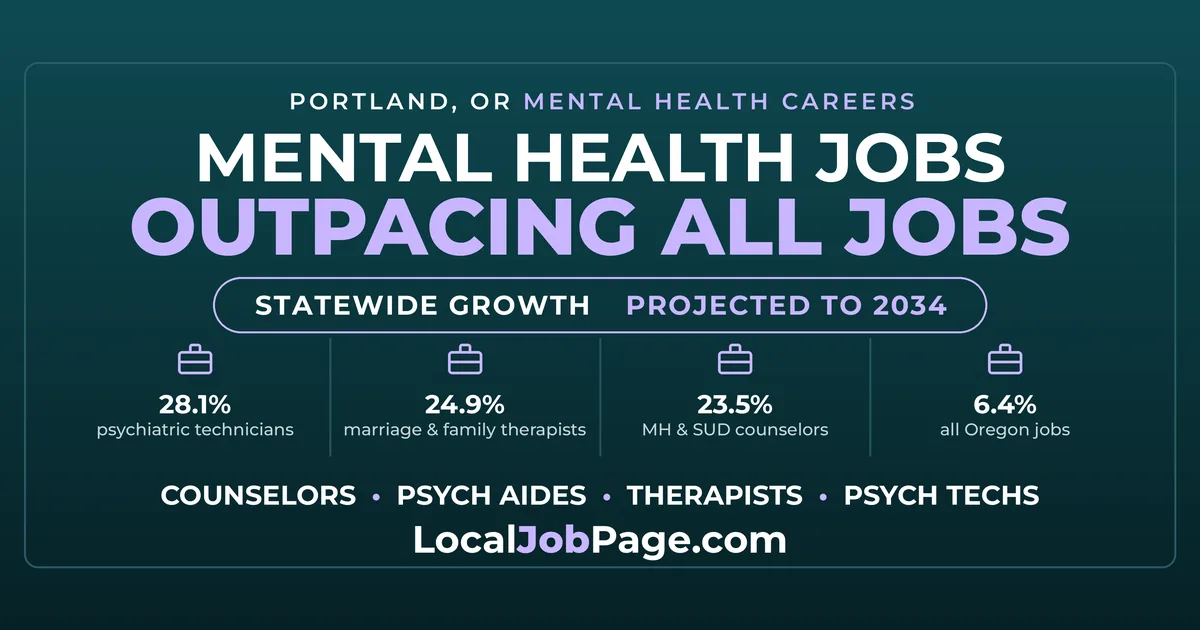
The department projects total Oregon employment will grow 6.4% through 2034. Nearly every mental health occupation is expected to beat that:
- Psychiatric technicians: 28.1%
- Marriage and family therapists: 24.9%
- Substance abuse, behavioral disorder and mental health counselors: 23.5%
- Clinical and counseling psychologists: 17.4%
- Community health workers: 14.6%
- Mental health and substance abuse social workers: 13.3%
- Psychiatrists: 11.8%
One wrinkle: school and career counselors show the slowest projected growth, just 2.7%, yet still rank among the occupations with the most total openings because so many current counselors will retire or move on.
These are statewide projections. The report does not break the figures out by county or metro.
🏥 Why It Matters in Portland
A lot of Oregon's behavioral health work happens in the Portland area, from hospital psychiatric units to community clinics across Multnomah, Washington and Clackamas Counties. The metro's large providers include Legacy's Unity Center for Behavioral Health in Northeast Portland, Cascadia Health, Central City Concern, OHSU, Providence and Kaiser Permanente, plus dozens of smaller nonprofits.
The state is also trying to make these jobs easier to get into and easier to keep. Governor Tina Kotek's Behavioral Health Talent Council, chaired by First Lady Aimee Kotek Wilson, issued a final report with 74 recommendations after finding that the current workforce falls short of demand and turns over quickly. The first bill to come out of that work, Cutting Red Tape for Behavioral Health Workers, passed in 2026. The council's page on Oregon.gov has the report.
Not every one of these jobs needs a graduate degree. Psychiatric aides and social and human service assistants are common starting points.
🔎 Start Your Portland Mental Health Job Search
The state report does not publish wages. The department's occupational profiles list Portland-area pay for each of these jobs.
Start here:
- Mental health counselor jobs in Portland
- Mental health therapist jobs in Portland
- Substance use counselor jobs in Portland
- Behavioral health technician jobs in Portland
- Psychiatric aide jobs in Portland
- Peer support specialist jobs in Portland
- Case manager jobs in Portland
- Cascadia Health jobs in Portland
- Legacy Health jobs in Portland
Portland Mental Health Jobs FAQ
Which mental health job is growing fastest?
Psychiatric technicians, projected to grow 28.1% in Oregon through 2034, followed by marriage and family therapists at 24.9%.
Are these numbers specific to Portland?
No. They are statewide Oregon figures. The report does not publish county or metro breakdowns, though the Portland area is home to many of the state's largest behavioral health employers.
Can I get into mental health work without a degree?
Some roles, such as psychiatric aide, are common entry points. Counselor and therapist jobs require more education and an Oregon license, so check the requirements before you apply.
Where can I find what these jobs pay in Portland?
The Oregon Employment Department's occupational profiles on QualityInfo list wages by occupation and region. The state's demand report itself does not include pay figures.
Put Your Name in Front of Portland Employers
Create your free LocalJobPage profile so Portland-area behavioral health employers can reach you, and browse every open job across the metro today.
Employers: hiring counselors, therapists or behavioral health techs in the Portland area? Post your openings here and reach local candidates directly.
Related Reading
- Portland Jobs Report: Health Care Keeps Hiring as Factory and Tech Jobs Slide
- PCC Healthcare Career Fair Oct. 16 in Hillsboro: Free and Open to the Public
- Fall 2026 Portland Job Fairs & Hiring Events: Your Complete Guide
From the clinics in Old Town to the hospital towers on Marquam Hill, Portland's behavioral health employers are looking for people. The state says they will keep looking for years.